How to Evaluate a Men's Supplement Before You Buy
Key points
- Ingredient transparency means named ingredients, not a combined blend weight.
- Serving size determines both the real dose and the real cost per day.
- Guaranteed-outcome and disease language are the clearest reasons to walk away.
- Confirm whether the purchase is one-time or recurring before you enter card details.
Not every product deserves your trust
The men's supplement category rewards scepticism. It's large, lightly policed at the marketing level, and full of products whose packaging promises considerably more than their contents could deliver.
The good news is that separating reasonable products from overclaiming ones takes about two minutes and six checks. None of them requires expertise — just knowing where to look and what should make you stop.
1. Transparent ingredients
You should know what ingredients are actually included. That sounds obvious; it isn't universal.
The common evasion is the proprietary blend — several ingredients grouped under a single combined weight with no individual amounts. "Male Vitality Complex — 900 mg" followed by six ingredients and no numbers. That 900 mg could be 880 mg of the cheapest component and traces of the rest, and you can't tell.
You do get one clue: ingredients within a blend must be listed in descending order by weight, so whatever appears first is the largest component. Useful when the expensive-sounding ingredients are listed last.
A product naming all its ingredients openly is doing better than a fair share of the category. HoneyFil's eight ingredients are each named with a stated role, which is the baseline worth demanding.
2. Clear serving information
The serving size should be easy to find, and it changes two things people routinely miscalculate.
The real dose. Every amount listed on a panel is per serving, not per capsule or gummy. If the serving is three capsules, those figures require taking three.
The real price. A 90-count bottle with a three-count serving is a 30-day supply, not a 90-day one. Its genuine cost per day is triple what the shelf price suggests.
When comparing products, convert both to cost per day at the labelled serving. The result is frequently the opposite of what the sticker implies.
3. Manufacturing information
Look for clear information about where and how the product is manufactured. A named country, a facility standard, and a manufacturer name and address that can be found.
What you should not accept is vague implication — badges suggesting certifications that aren't named, or claims of testing by organisations that go unidentified. If a certification is real, it can be stated specifically.
Also check for a lot number and expiry date on the bottle itself. Their absence is a genuine quality concern rather than a packaging oversight.
4. Realistic language
Be cautious of products promising instant or guaranteed transformations. This is the fastest filter available and it eliminates a lot of products quickly.
Specific warning signs: named medical conditions presented as things the product addresses; guaranteed outcomes by guaranteed dates; comparisons to prescription medication; "clinically proven" without a citation to a study on the finished product rather than one ingredient; anything described as working overnight for a process that takes weeks.
The inverse is a positive signal. A product that states plainly what it does not promise — no instant transformation, no guaranteed results, no medical treatment, no prescription-like effects — is telling you something useful about how it intends to be understood.
5. Safety information
A responsible product should clearly communicate appropriate precautions: who shouldn't take it, which circumstances warrant a conversation with a doctor first, and a clear statement that it doesn't replace medical care.
Missing contraindication information isn't a design choice. It's a gap, and it tells you something about the seller's priorities.
The specific advice worth following regardless: speak with a healthcare professional before use if you take prescription medication or manage a medical condition, and take the actual product label with you rather than relying on a website.
6. Clear purchase terms
Understand whether the purchase is one-time or recurring. This is the most frequent complaint across the entire supplement industry, and it's entirely avoidable.
Before entering card details, establish three things: is this a single transaction or a subscription? If it renews, at what interval and price? And what exactly does cancelling or claiming a refund require?
Free-trial offers converting to recurring billing are the classic trap. So are refund policies requiring unopened bottles or quietly excluding shipping.
Products sold as one-time purchases with no automatic renewal remove the problem entirely, which is worth weighting in your decision. Our assessment page applies all six of these checks to one product if you'd like to see them used in practice.
Your own checklist first
One final point, and it's the one most likely to save you money.
Before adding any supplement, run through the more basic questions. Am I sleeping enough? Exercising regularly? Eating a balanced diet? Drinking enough water? Managing stress? Have I discussed medications and supplements with my healthcare professional?
A supplement is one component of an overall plan, not a substitute for the parts that do the heavy lifting. Any product suggesting otherwise has already failed check four. For the wider context on how a formula fits alongside those habits, see building a men's wellness routine or the HoneyFil overview.
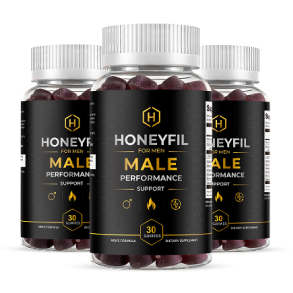
Eight ingredients, one convenient gummy
HoneyFil® brings together nutritional ingredients and botanical extracts selected around energy, circulation, stamina, endurance and vitality. One-time purchase, no automatic renewal, 60-Day Satisfaction Promise.
Individual results vary.
Get HoneyFil® →Common questions
What should I check first on a supplement label?
Serving size, because it determines both the actual dose you receive and the true cost per day. Then check whether individual ingredient amounts are disclosed or hidden in a blend.
What is a proprietary blend?
A group of ingredients listed under one combined weight without individual amounts. Ingredients appear in descending order by weight, but the ratio between them is not disclosed.
What claim language should make me walk away?
Named disease claims, guaranteed outcomes by specific dates, prescription-drug comparisons, and results promised in days for processes that take weeks.
How do I avoid supplement subscription traps?
Confirm before ordering whether the purchase is one-time or recurring, at what interval and price it renews, and exactly what cancelling or claiming a refund requires.
When to talk to your doctor
A supplement should never delay appropriate medical care. Talk with a healthcare professional if you experience persistent or unexplained changes involving energy, exercise tolerance, circulation, sexual function, physical performance or general wellbeing.
Speak with a healthcare professional before using HoneyFil if you take prescription medication or manage a medical condition. HoneyFil is a dietary supplement and should not be used as a replacement for prescribed treatment.
These statements have not been evaluated by the Food and Drug Administration. This product is not intended to diagnose, treat, cure, or prevent any disease. Individual results vary.
Return to the HoneyFiel homepage, review all eight ingredients, or read our honest product assessment.