Energy vs Stamina vs Endurance: Three Different Things
Key points
- Energy relates to how your body produces and uses fuel.
- Stamina relates to your ability to remain active.
- Endurance relates to maintaining physical effort over time.
- Each has different limiting factors, so each responds to different interventions.
Why the words get mixed up
Walk down any supplement aisle and these three words appear on the same labels, often in the same sentence, as if they were synonyms with different syllable counts.
They aren't. Energy relates to how your body produces and uses fuel. Stamina relates to your ability to remain active. Endurance relates to maintaining physical effort over time. Related, overlapping, but genuinely distinct — and each has different limiting factors.
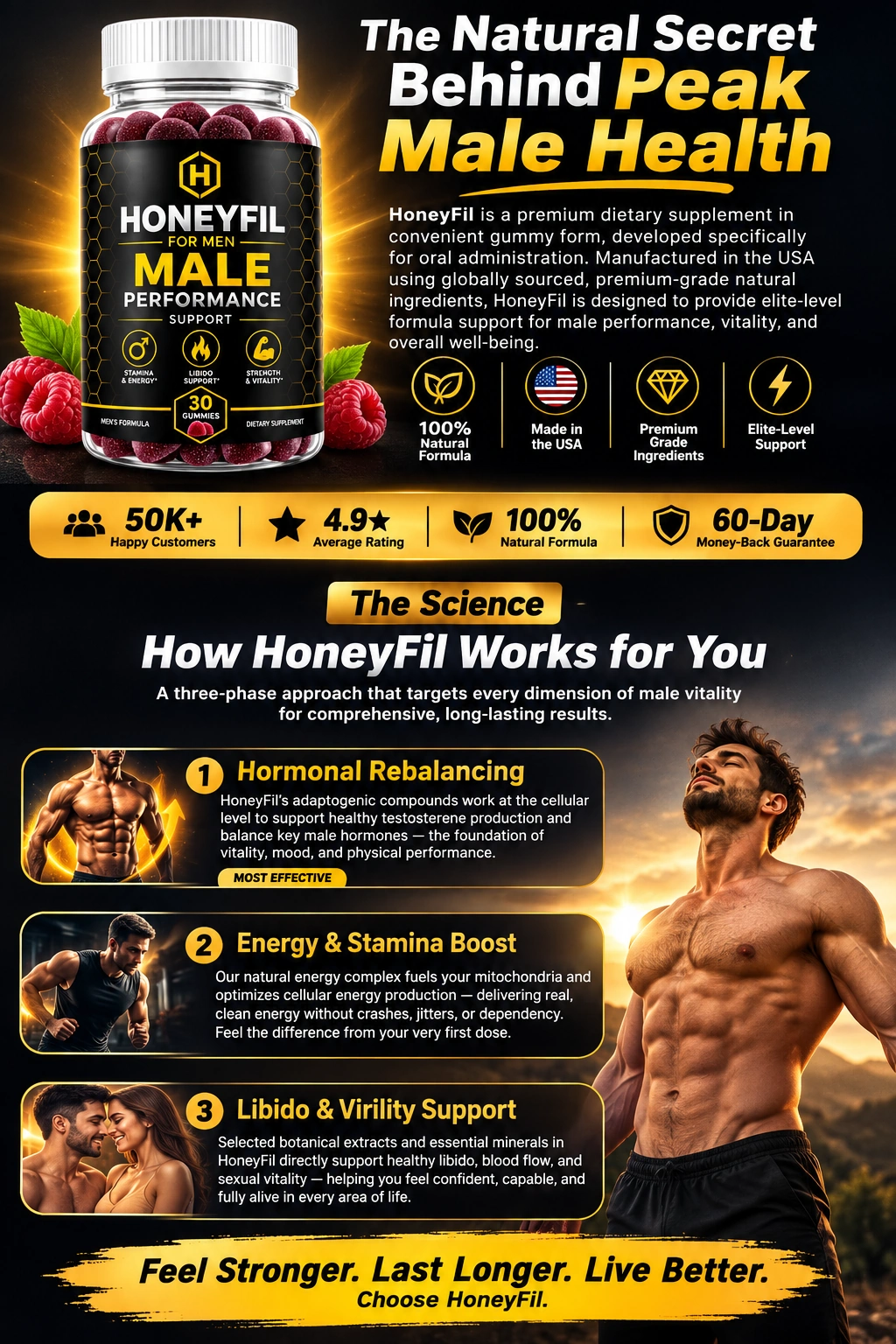
Understanding which one you're actually short of is useful, because the interventions differ. This is also why HoneyFil addresses these areas through a combination of ingredients rather than relying on one alone.
Energy: fuel production
At the cellular level, energy means converting food into ATP, the molecule that powers essentially everything your cells do. That conversion runs through a chain of metabolic reactions, each requiring specific cofactors.
Two nutrients are worth knowing here. Vitamin B3 is used to build NAD and NADP, coenzymes central to those reactions — textbook nutrition science rather than emerging theory. L-carnitine transports long-chain fatty acids into mitochondria so they can be used as fuel; without it a major fuel source stays inaccessible.
Both appear in the HoneyFil formula, on the energy side rather than the circulation side.
What limits energy in practice, though, is usually not a nutrient shortfall. It's sleep debt, inconsistent eating, alcohol, or an undiagnosed condition. Fix those before assuming a metabolic problem.
Stamina: staying active
Stamina is about duration at a moderate output. Can you stay on your feet through a full day? Walk the golf course rather than ride? Get through a house move without needing to sit down every twenty minutes?
The limiting factors are different from energy. Stamina depends heavily on aerobic capacity — how efficiently your cardiovascular system delivers oxygen — and on muscular efficiency at submaximal loads.
It also depends on circulation, which is where the areas overlap. If delivery can't keep pace with demand, you fatigue sooner regardless of how much fuel is theoretically available. Our piece on circulation support for men covers that side in detail.
Endurance: sustaining effort
Endurance is stamina's more demanding relative — maintaining physical effort over an extended period, often at higher intensity or under load.
Here the limiting factors expand. Aerobic capacity still matters. So does the ability to clear metabolic byproducts, fuel availability across longer durations, thermoregulation, and simple mechanical durability of joints and connective tissue.
The practical difference: a man might have good stamina for a long day of moderate activity while having poor endurance for two hours of sustained hard effort. Those are separate capacities and they train separately.
What actually limits each
| Capacity | Main limiters |
|---|---|
| Energy | Sleep, nutrition consistency, metabolic cofactors, underlying conditions |
| Stamina | Aerobic capacity, circulation, muscular efficiency |
| Endurance | All of the above plus waste clearance, fuelling, joint durability |
Notice that circulation appears in two of three rows and underpins the third indirectly. That's not a coincidence, and it's the reason circulation-focused ingredients turn up so often in formulas positioned around physical performance.
How to train each one
Energy is mostly not a training target — it's a recovery and nutrition target. Consistent sleep, regular meals with adequate protein, moderate alcohol.
Stamina responds to volume. Frequent moderate aerobic activity — walking, cycling, swimming — accumulated across the week. Consistency beats intensity here by a wide margin.
Endurance responds to progressive duration and intensity, plus resistance training to build the structural durability that longer efforts demand. It's also the capacity most affected by recovery, so it degrades fastest when sleep slips.
One caution for men returning to training after time away: cardiovascular fitness adapts within days, while tendons and connective tissue adapt over months. That gap is where most injuries happen. Start well below what feels achievable.
The nutritional angle
Nutrition supports all three but drives none of them. That's the honest position, and it's worth holding onto when reading any product page in this category.
What a broad formula can reasonably do is provide nutritional support across several areas at once rather than concentrating on one. HoneyFil takes that approach deliberately — eight ingredients with different roles rather than a single hero component, which is assessed in full here, including the parts that count against it.
And the usual caveat applies: no supplement replaces diet, exercise, sleep, hydration or appropriate medical care. If your capacity has dropped substantially without obvious explanation, that warrants a doctor rather than a purchase.
Eight ingredients, one convenient gummy
HoneyFil® brings together nutritional ingredients and botanical extracts selected around energy, circulation, stamina, endurance and vitality. One-time purchase, no automatic renewal, 60-Day Satisfaction Promise.
Individual results vary.
Get HoneyFil® →Common questions
What's the difference between stamina and endurance?
Stamina relates to your ability to remain active, typically at moderate output. Endurance relates to maintaining physical effort over time, often at higher intensity or under load.
Is energy the same as stamina?
No. Energy relates to how your body produces and uses fuel at a cellular level, while stamina relates to how long you can stay active. They have different limiting factors.
Which nutrients relate to energy metabolism?
Vitamin B3 contributes to normal energy metabolism, and L-carnitine participates in normal cellular energy metabolism and fatty-acid transport.
Can a supplement improve stamina?
A supplement can provide nutritional support, but stamina is primarily determined by aerobic capacity, circulation and training. No supplement replaces exercise, sleep or nutrition.
When to talk to your doctor
A supplement should never delay appropriate medical care. Talk with a healthcare professional if you experience persistent or unexplained changes involving energy, exercise tolerance, circulation, sexual function, physical performance or general wellbeing.
Speak with a healthcare professional before using HoneyFil if you take prescription medication or manage a medical condition. HoneyFil is a dietary supplement and should not be used as a replacement for prescribed treatment.
These statements have not been evaluated by the Food and Drug Administration. This product is not intended to diagnose, treat, cure, or prevent any disease. Individual results vary.
Return to the HoneyFiel homepage, review all eight ingredients, or read our honest product assessment.